Search This Blog

Saturday, 26 September 2015

Top 5 Batman villains

Today is Batman Day where DC comics celebrates its most famous hero: The Dark Knight. Since his debut in 1939 Batman has amassed a sizable gallery of villains that can only be surpassed by possibly Superman (also DC comics) and Spider-Man (of Marvel). Today I will be going through my personal five favorite Batman villains. To be on the list they have to regularly appear as an adversary of Batman but no anti-heroes can be on the list (such as Catwoman). However villains forced to do good are eligible to appear on the list. Now let's look at the villains who have plagued the Caped Crusader over the years.

5- Harley Quinn
Harley Quinn is the only character on the list not to make their debut appearance in the comics. Instead she debuted on the animated TV show Batman: The Animated Series as a sidekick to the Joker. She made her first (official) comic appearance in Batman: Harley Quinn in 1999. Harley Quinn was originally a psychiatrist studying the Joker at Arkham Asylum but the Joker's personality and insanity drove her insane as well. She turned from a caring doctor to a homicidal girlfriend for the Joker helping him with his schemes. What gives Harley Quinn a spot on this list is her unique relationship with the Joker. Despite his constant mental and physical abuse to her she perversely loves him and has become devoted to him. Also she is one of the few sidekicks to leave the shadow of the main hero/villain with her becoming an integral part of the Suicide Squad being one of the de facto leaders alongside Deadshot. The fact that Harley Quinn is being advertised as one of the main characters in the upcoming Suicide Squad movie and that she was a main villain in Batman: Arkham Knight shows how much of an enduring character she is,

4- Two Face
Two Face (Harvey Dent) can be considered to be much like Bruce Wayne. Both were committed to the law and a tragic event shaped their lives; Bruce Wayne pushed forward and became the Batman while Harvey Dent lost his mind. First appearing in 1942 in Detective Comics #66 he is also one of Batman's oldest villains. Harvey Dent was a district attorney until crime boss Sal Maroni threw acid into his face. Half his face became scarred and Dent's mind broke. Now as Two Face he attempts to rule Gotham's underworld making decisions (normally if he should kill someone) with a flip of a coin. His fall from grace in Batman: The Long Halloween is a riveting story and his dependence on the coin is an enduring character trait making him one of Batman's iconic villains.

3- Bane
Bane has the distinction of not only physically breaking Batman but also mentally breaking him. Bane made his appearance in Batman: Vengeance of Bane #1 where he was born in a prison. Fear and darkness ruled his life until he was tested on with the experimental steroid Venom. It briefly gave him increased strength and with his sharp mind he broke out from prison. He saw how Batman ruled Gotham with fear and recognized how similar it was to how fear ran his prison so he decided to take down Batman. He fathomed out Batman's identity and in the Knightfall story arc started to wear down Batman physically and mentally by freeing his entire rogue's gallery out of Arkham Asylum. As Batman is slowly worn down Bane faces him in the Batcave where he breaks Batman's back over his knee.
Not only is Bane made of brute force but he is also cunning, intelligent and a schemer which makes him a villain that could easily 'break the bat'.

2- The Joker
Without a doubt the Joker is one of Batman's most famous villain. Making his debut in Batman #1 in 1940 he has been with the Dark Knight from the start. The Joker's history is too long to repeat here (for more info look here :http://historyandgeekstuff.blogspot.co.uk/2015/07/comics-explained-joker.html) but his exploits have included killing the second Robin, paralyzing Batgirl, sending Dr Harleen Quinzel insane so she could become Harley Quinn and recently having his face surgically removed. The Joker also represents the darker side to Batman. Where trauma had forced Bruce Wayne to become a vigilante to help the people of Gotham the trauma that the Joker went through turned him into a homicidal maniac wanting to bring only death to Gotham. Of course he does all of this with a laugh and a smile making anyone scared of clowns scared of this signature Batman foe. 

1- Scarecrow
Scarecrow is my personal favorite Batman villain for one reason: he can exploit the one weakness that we all have. Fear. Scarecrow (Jonathan Crane) made his debut in 1941 in World's Finest Comics #3. Crane was obsessed with fear which led him to perform experiments on the patients at Arkham Asylum where he worked as a psychiatrist. There he developed a gas which could make anyone who inhaled it see their worst nightmares. Although often passed over by more notable villains such as the Joker and the Penguin the Scarecrow is easily one of the major Batman villains. Like Batman he uses fear to stalk his enemies and make them go mad. Imagine being sprayed with his gas or injected with his serum and seeing your worst nightmares come to life before your very eyes. That is why Scarecrow is number one on my list.

Do you agree with my list? Are there any villains that you think should be on there? Please leave your ideas in the comments!

Friday, 18 September 2015

What is the difference between England, Great Britain and the United Kingdom?

This week is the anniversary of the Battle of Britain where the RAF fought the Luftwaffe during the Second World War over dominance for Britain's skies. If the RAF had lost the battle then a German invasion of Britain may have occurred. Why is it not called the Battle of the United Kingdom? After all the nation at the time was called the United Kingdom. This week I'll explain the difference between England, Great Britain and the United Kingdom.

England
England is highlighted as red on the above map. It was founded sometime in the tenth century as the Kingdom of England and quickly became a leading military power not only in the British Isles but also Europe. In 1284 Wales was added to the Kingdom of England by Edward I. We commonly refer to Great Britain and the United Kingdom as 'England' for a few reasons. One is because Great Britain and the United Kingdom were united under England. Throughout England's history London has been its capital so as the strongest country it is clear to see why we still call the modern day nation England. It also happens to be the most populated and the geographically largest of the states which comprise Great Britain and the United Kingdom. It is similar to how we sometimes call the Netherlands Holland or the USSR (when it was around) Russia. In 1707 England ceased to be a nation with the Act of Union which formed Great Britain.

Great Britain
To understand Great Britain we first must discuss the Act of Union and the events which led up to it. In 1603 Elizabeth I of England died without an heir which ended the Tudor dynasty. Multiple English politicians had organized the great-grandson of Margaret Tudor (Henry VIII's elder sister) James VI of Scotland to ascend the throne of England. In 1603 he became James I and VI uniting the crowns of Scotland and England. His heraldic badge blended the English rose and Scottish thistle together. 
Since 1603 there had been several attempts to permanently unite Scotland and England under one government (such as a failed attempt by the son of James, Charles I). Eventually in 1707 with English funds drying up thanks to the Spanish War of Succession and Scotland's economy destroyed thanks to a failed attempt to create a colony in Panama the Act of Union was passed. This united Scotland and England under one government in London called the United Kingdom of Great Britain. Britain having its origins in the Latin name for the island, Britannia. Even the flags of England and Scotland were blended together.
We often refer to the United Kingdom still as Great Britain and use such phrases as British people, British empire and British trade. This could likely be because under the title of Great Britain the first global power emerged from the British Isles. By the time of the formation of the United Kingdom Britain had territories in every continent. Another reason could be thanks to a need to unify the English and the Scottish. By adopting British as a nationality instead of English or Scottish this could allow previously opposing peoples to find common ground.

United Kingdom
Everything in color on the above map is the modern day United Kingdom. What we now recognize as the United Kingdom came into being in 1800. Since 1542 Ireland had been a client state of England (and later Great Britain) after Henry VIII had been imposed as the King of Ireland. Since then Irish/English relations had not been great with the English often invading to expel Catholics or deprive them of rights (especially during the years of the English republic under Oliver Cromwell).In 1798 influenced by the ideas of the American and French revolutions and supported by French revolutionaries a group known as the United Irishmen rose up against British rule to have a truly independent Ireland. It was quickly and brutally crushed by the British but it influenced the 1800 Act of Union. This united the Kingdoms of Great Britain and Ireland under one government and like with the previous Act of Union the flags were merged.
The above flag is still in use today. On January 1st 1801 the United Kingdom of Great Britain and Ireland was declared. During this time the British Empire became its most powerful which easily eclipsed the French, Portuguese and Spanish empires. Under the United Kingdom we also saw the Victorian era with Queen Victoria ruling for most of the century and became the longest ruling monarch (now only beaten by Elizabeth II just last week) as well as industrialization. However Irish nationalism did not end. By the 20th century call for Home Rule (a self rule) was demanded by Irish nationalists and several militant organizations such as the Irish Republican Brotherhood came into existence. When the First World War broke out there was even a violent uprising in 1916 called the Easter Rebellion which was crushed by the British army. From 1919 to 1921 there was an Irish War of Independence (sometimes referred to as the Irish Civil War) where the British fought a guerrilla war against Irish republicans who wanted a fully independent Ireland, including Ulster which wanted to remain apart of Great Britain. In 1922 the Irish Free State was created and the United Kingdom turned into the United Kingdom of Great Britain and Northern Ireland. To this day this is what the country had been referred to as.

The Battle of Britain
So why is the Battle of Britain called this even though the fighting took place in England? Likely nationalism. People were more nationalistic towards Britain than the United Kingdom as most of the things to get nationalistic about, (a national identity, a democratic Parliament, an Empire), became huge when called Great Britain. During World War Two nationalism was required to keep the public wanting to win the war so that could be the reason why we call it the Battle of Britain and not the Battle of England or the Battle of the United Kingdom.

On a side note the blog will not be on every Friday now. It will remain a weekly blog but the days on which it is published may vary.

Friday, 11 September 2015

Who was Che Guevara?

Many people recognize this picture as being a portrait of Marxist revolutionary Ernesto 'Che' Guevara. For around forty years his image has been distributed throughout the media on clothes, in music and film and on advertisement (it is somewhat ironic how capitalism has adopted a Marxist in the pop culture). In my hometown there is even a bar named after him. David Segal of the Washington Post described his legacy:
The guy's face is shorthand for 'I'm against the status quo.' He's politics' answer to James Dean, a rebel with a very specific cause.
Who was he exactly and why has he been adopted as a symbol of revolution and shaking the status quo?

Early life
Che aged 22
 Che was born in 1928 in Argentina where he grew up in a left wing family. His father was a staunch supporter of the left wing Republican Spanish government and following the Spanish Civil War his father often invited veterans to his home. At school Guevara excelled at sports despite his asthma but he was an even greater intellectual. He could recite the entirety of Rudyard Kipling's If  and could quote almost all the works of Sigmund Freud. Among the subjects that he did best at included political science, history, engineering, sociology, maths, archaeology and philosophy. In 1948 he entered the University of Buenos Aires to study medicine. In 1950 he started the first of his motorcycle trips through South and Central America which by 1953 had allowed him to travel over 8,000 km, some of it with his friend Alberto Grenado. He wrote down these travels in his memoir The Motorcycle Diaries. These travels helped influence his Marxist views as he saw widespread poverty in rural areas, especially around Machu Picchu during his time in Peru. He decided that capitalism had oppressed these people and that he had to 'help these people'. In 1953 he returned to Argentina where he finished his degree becoming Dr Ernesto Guevara.

Becoming a Revolutionary
After he left university he spent some more time travelling until he briefly settled in Guatemala. Guatemala at the time was ran by the democratically elected left wing President Jacobo Arbenz who had started appropriating land from the US company United Fruit Company to give to poor farmers. This proved to be the perfect place for Ernesto with the Arbenz government being his ideal government for its land reforms. Here he met up with Peruvian economist Hilda Gadea Acosta who had leads to the revolutionary group Alianza Popular Revolutionaria Americana. In 1955 he would marry Gadea and they would have a daughter together. He made contacts with exiled Cuban revolutionaries, dedicated a poem called Invitacion al camino to feminist left-winger Helena Leiva de Holst and earned his nickname Che. He often used the Argentine slang 'che' (similar to calling someone 'bro') which earned him the nickname. In 1954 the CIA helped overthrow the Arbenz government to replace it with a military junta. Che fled to Mexico with Gaeda. In Mexico City he worked in the local allergy ward, as a photographer and a lectured occasionally. Gaeda reported that he wished to go to Africa to work as a doctor with the high level of poverty there striking a cord with him. However he chose a revolutionary path with him being introduced to Raoul Castro who introduced him in turn to his older brother Fidel Castro and the 26th of July Movement. They wished to overthrow the regime of Cuban dictator Fulgencio Batista and install a government which would benefit the people. He started to become trained in guerrilla warfare which would influence the rest of his life.  

Cuba
Che took part in the Cuban Revolution alongside Fidel Castro where he quickly became Castro's second in command. There is some juxtaposition during this time. On the one hand he was seen as a hero with him hiding with poor peasants whose high level of illiteracy (40% of peasants in Cuba were illiterate) and no electricity increased his urge to help them. In contrast however he proved to be ruthless and autocratic in response to spies, deserters and informers such as sending battalions out to execute people gone AWOL as well as summary executing many people. To those who stayed loyal he did prove to be an equally loyal leader, evident from this quote by Joel Iglesias who had been wounded in battle:
Che ran out to me, defying the bullets, threw me over his shoulder, and got me out of there. The guards didn't dare fire at him ... later they told me he made a great impression on them when they saw him run out with his pistol stuck in his belt, ignoring the danger, they didn't dare shoot.
This could easily be hero worship though so may not be accurate evidence. Che helped found the anti-Batista radio Rebel Radio. He even led his forces to capture Santa Clara which turned out to be the first significant victory in the revolution. However he had started to see another woman, Aleida March, at this time despite being married. When Batista fled Cuba Che arrived in the capital of Havana with Castro following six days later who had been rallying several large cities. Although he was granted Cuban citizenship he confessed to his wife that he had been having an affair and the marriage quickly ended in divorce. Soon after he married Aleida March and they would go on to have four children together.

Following the revolution Castro placed Che in charge of a tribunal for informers, war criminals and traitors for five months. It is difficult to tell Che's attitude to the 55 to 105 (sources are not reliable) people he had executed. Some exiled Cubans claim that he did this with relish while others claimed that he pardoned as many people as he could. What can be conclusively claimed though was how he became hardened by it and agreed that it was necessary to defend what the revolution had achieved.

After the tribunal he oversaw the land reforms which gave more land to poorer peasants, his travels in South America was still very much with him. He also started the Cuban literacy project. Before the revolution between 60-76% of the population was literate, around 40% for peasants, and like all of his other economic projects it was a success. By 1961 national literacy was at 96%. In 1959 Castro also sent Che to make diplomatic calls to countries neutral in the Cold War including Yugoslavia, Egypt, Indonesia and Pakistan as well as pro-US nations (in Japan he criticized Imperial Japan but also went to Hiroshima to commemorate those who had died there) and communist countries including East Germany and China. He even called for the UN to put pressure on South Africa to end Apartheid. This could have influenced his policy of affirmative action when he returned to Cuba to help ethnic minorities get into university. Che at this time also started the 'New Man' project where he wanted to create a Cuba that was hard working, selfless, gender-blind and anti-imperialist. He founded a series community centers, women's groups, labor groups and youth groups to do this. Che also visited the USA where he appeared on Face the Nation where he won the admiration from Malcolm X. When the USA sent over a thousand Cuban exiles in the Bay of Pigs invasion he was injured when his pistol went off as it fell out of his holster. 

Congo and Bolivia
In 1965 Che left Cuba. There are various conflicting sources about why he did this. Some argue that is was because he was angry about being kept in the dark by Castro, others about his disagreement about foreign policy (Che favoring aiding the third world while Castro wanted closer ties to the USSR following the Cuban Missile Crisis), others saying that Che was angry at the corruption of the Castro regime and others simply that he wanted to continue spreading the ideas of the revolution. Regardless of the true reason he went to the Congo. Ever since his days in Mexico he had wanted to help the poor of Africa. The Congo was the most idealistic place for Che to start his revolution. It had gained independence in 1960 and its anti-imperialist prime minister, Patrice Lumumba, had been overthrown and executed in a coup led by Colonel Mobutu. Che with 100 Afro-Cubans and 12 Cuban expeditionaries (along with his second in command Victor Dreke) joined up with guerrilla leader Laurent-Desire Kabila, a pro-Lumumba leader. Che hired a younger interpreter as well to help teach him Swahili. Che tried to teach the guerrillas a Marxist-Leninist ideology to reconstruct the country and to teach Kabila's forces to fight. He quickly left Kabila though due to the low discipline. Soon after he left the Congo thanks to bad asthma, dysentery and the people not being interested. He said 'we can't liberate a country that doesn't want to fight'. He left some of his force behind and left for Bolivia. With Castro publishing Che's farewell letter he decided that he couldn't return to Cuba so decided to fight in Bolivia, again going back to his days on his motorcycle.

His whereabouts in Bolivia was largely unknown but like in Congo his force of 50 working as the ELN was not successful. In 1967 the Bolivian army managed to successfully wipe out two guerrilla groups, reportedly killing one of the leaders. Like in the Congo Che was unable to get widespread support but there were other reasons why he failed. Castro had supplied him with radios which were faulty which caused communication issues, Bolivia's Communist Party was corrupt and instead of facing the weak Bolivian army he also had to face CIA trained commandos who had been training the army. Felix Rodriguez, a Cuban exile who was a CIA agent, told the Bolivian army where in the forest to look for Che. On October 8th 1967 Che was captured and the following day he was executed.

Why has his legacy become so potent?
A monument to him in Bolivia
There are many reasons why Che Guevara has developed such a legacy in the pop culture. His journeys among the poor and work with them during his time in Cuba made him very sympathetic. Him leaving Cuba, apparent betrayal by Castro and staunch anti-corruption set him apart from the totalitarianism from Castro's Cuba. Whereas other revolutionaries such as Lenin, Mao and even Castro himself abandoned their ideals Che apparently never did that, he always stuck to his ideals. Che was also a revolutionary during the 1960s when liberal ideas became more popular so his anti-authority, pro-civil rights and pro-women's rights stuck with that generation and as these ideas became even more popular during the 1970s and 1980s this further increased his popularity. Finally he died a martyr. Being betrayed and executed his legacy became preserved. He became someone who died for his belief. Often that can be very potent. In a world striving for equality, no corruption and helping the oppressed it is easy to see why Che is still a popular icon.

Friday, 4 September 2015

Top 5 Wes Craven films

Earlier this week film director Wes Craven unfortunately passed away. For over forty years Wes Craven had been making films and his horror films have changed the genre completely. As a horror fan it would be disrespectful of his memory not to commemorate his work. Here are my personal top 5 films by Wes Craven.

5- The Hills have Eyes
 The Hills have Eyes was the second film that Wes Craven made and has been one of his most enduring. The plot revolves around a family travelling through a deserted part of the Nevada desert whose car breaks down. In the night they are set upon by a clan of cannibals led by the patriarch Papa Jupiter, played by James Whitworth. Hills is not a film for the faint of heart for its unapologetic violence and intense themes. which earned it a criticism from Roger Ebert for being 'decadent'. The low budget and gritty atmosphere of Hills intensifies the violence. Despite the actual lack of gore this adds to the atmosphere of Hills with it leaving more up to the imagination of the audience. Unlike his two more famous horror movies Hills never managed to get a mainstream following but a major cult following did occur which allowed a sequel and a remake. Hills will definitely divide any movie audience but for those who can stomach intense scenes this can be a cult classic.

4- Red Eye
The second film on our list by Wes Craven is not actually a horror but instead a thriller (and a very thrilling film at that). Red Eye centers around a hotel owner played by Rachel McAdams who happens to sit next to a man that she had been chatting to at the airport bar played by Cillian Murphy. It quickly transpires that Cillian Murphy's character is a terrorist who wishes to assassinate the Deputy Secretary of Homeland Security and his family who is staying in McAdams's hotel. Craven managed to create a fast paced and claustrophobic setting for Red Eye with the danger towards McAdams being ever present. Murphy played a good villain and seemed genuinely threatening which added to the atmosphere. The over-the-top ending may ruin the film for some but acclaimed movie reviewer Roger Ebert had this praise for the film regardless: 
“After a summer of crashes, bangs, endless chase scenes and special effects that belittle the actors standing in front of them, what a pleasure to see characters in a thriller doing what people like themselves possibly could do.”
Often overlooked by films such as Non-Stop Craven's Red Eye is a good hidden gem.

3- New Nightmare
New Nightmare is the seventh installment in the Nightmare on Elm Street franchise and is easily the most inventive. The plot revolves around Heather Langenkamp who played Nancy in the first Nightmare film being stalked by someone playing Freddy Krueger (the villain in the franchise) and she soon finds out that Wes Craven, playing himself, and Robert Englund (who played Freddy Krueger in every Nightmare film bar the remake) are also being stalked. All this is happening while the new Nightmare film is being made. They quickly learn that Freddy Krueger has started to come into the real world. New Nightmare is a good edition to the Nightmare franchise not only for being creative but also because of the idea that it perpetuates that no one is safe. It is quite novel to see Wes Craven, Heather Langenkamp, Robert Englund and John Saxon (who was also in the first film) play themselves and face their own creation thirsty for their blood. It helps perfectly show how enduring the franchise is, how much it has influenced the horror movie industry and pop culture as well as ending the franchise. It proved to be the last film until nine years later when Freddy Krueger went up against another horror movie icon in Freddy vs Jason.
2- Scream
Not only is Scream a horror movie which gave new life to the genre but it also out the flaws/cliches found in the genre to its advantage. A series of murders revolving around horror movie cliches is occurring in a small town. A voice is talking to teenagers, quizzing them on their horror movie knowledge before murdering them, and a local TV reporter played by Courtney Cox is take advantage of the story. Utilizing all the tropes of a who-dunnit movie and the horror movie Scream manages to create a creepy and heart-pounding atmosphere. With the killer wearing the ghost mask that can be found in any shop and talking down a phone before the days of widespread caller ID the list of suspects could be endless which greatly benefits the movie. Satirizing horror movie tropes Craven managed to create a self-aware film which will actually have you on the edge of your seat, such as one scene where a character is watching Halloween shouting at the movie character that the killer is behind them when in fact the ghost mask villain is actually behind him. The many subtle references to other films is also nice to see like Drew Barrymore's early death referencing Janet Leigh's in Psycho and Wes Craven himself wearing a red and green striped jumper as 'Fred the janitor'.

1- Nightmare on Elm Street
Nightmare is possibly one of the greatest horror movies of the 1980s. The plot centers around Nancy Thompson, played by Heather Langenkamp, and her friends who are being stalked in their dreams by a burned man wearing a green and red striped jumper and a gloved right hand which has knives on the fingers. Whatever happens to them in the dreams however happens to them in real life. They have to find a way to stop the burned man, called Freddy Kreuger and is played by Robert Englund, as he kills them one by one. Nightmare put the slasher genre on its head by adding a supernatural element to the film. You can easily escape Jason Voorhees by simply running away but how can you run away from someone coming into your dreams? The creative visuals and fantastic prosthetics used to create Freddy Krueger makes Nightmare a truly scary horror movie. Johnny Depp actually made his acting debut in Nightmare as well. Spawning seven sequels, a crossover, a TV series, a cameo in the video game Mortal Kombat, countless comic appearances and a film remake Nightmare is easily one of horror's most enduring series. With Craven putting so much effort into his film it is easy to see why the film transcended cult status and immediately became a mainstream hit. 
R.I.P Wes Craven.

Friday, 28 August 2015

Why is Korea divided?

Over the last week North and South Korea have entered talks to help stabilize the current tensions between the two countries. The 38th Parallel, the border between North and South, is one of the most heavily militarized borders in the world with 2 million soldiers guarding the border on both sides. Both countries are vastly different from one another ranging from politics to culture and even what year it is, in North Korea their calendar starts when its founder, Kim Il-sung, was born. How did the Korean peninsular get divided?

Initial Division
In 1910 Korea was annexed by Japan which added the peninsula to the Japanese Empire. Many Koreans fled abroad, some to China who founded the Provisional Government of the Republic of Korea under Syngman Rhee while others in China founded the Communist Party of Korea. One of its early members was Kim Il-sung. The communists led guerrilla fighting against the Japanese from 1919 until 1925 while the Provisional Government tried to establish international support for Korea. Both failed. Throughout the 1920s and 1930s there was a forced cultural assimilation of Koreans to adopt Japanese culture which ranged from banning the speaking of Korean in public to name changes for Koreans. This would later inspire the Allies at the 1943 Cairo Conference during the Second World War to establish Korean independence. Great Britain, the USA and China all agreed to help establish Korean independence. At the Yalta Conference two years later the leader of the Soviet Union, Joseph Stalin, agreed to declare war on Japan. On the 10th August 1945 the Red Army had started to invade northern Korea. The same day two US generals, Charles Bonesteel III and Dean Rusk, were tasked with deciding where the US occupation of Korea would lie. They decided to place US occupation for everything below the 38th parallel while the Soviet Union would occupy everything above the 38th parallel. When Japan surrendered later that year the Koreans wished for their own right to rule themselves but this was denied by both the Soviet Union and USA. In the south the US occupiers banned protests and in 1946 widespread riots in what was known as the Autumn Uprising led to martial law being imposed. In 1948 elections took place in the North and South which was marred by terrorism in the south. Following the election the Worker's Party of Korea won under the leadership of Kim Il-sung while in the south the election was won by the pro-American and anti-communist Syngman Rhee. War would soon follow.

Countdown to the Korean War
Kim Il-sung on the left, Syngman Rhee on the right
In the south prior during 1948 Syngman Rhee led multiple purges against left wing groups, such as banning leftists and communists from taking part in southern politics. Multiple atrocities soon followed, the worse being the Jeju Uprising in 1948 where the South Korean army massacred between 14,000-30,000 people, something which the government blamed on the communists. Many other atrocities took place on the pretext of the army hunting for communist guerrillas. In the North meanwhile Kim Il-sung was also removing political opponents. Most of the other left wing parties were merged into one under Kim Il-sung's leadership and the leaders of those parties who refused to join Kim's party were arrested. All parties that weren't the Workers Party of Korea were banned, those who supported other parties arrested and public organizations were made illegal. Unlike in the south there were no mass protests as Kim Il-sung had already started creating a personality cult surrounding himself. The first statues of himself calling him 'The Supreme Leader' started appearing in 1949. Quite likely this allowed him to quickly indoctrinate the public into supporting him, aided by the fact that he fought the Japanese as a guerrilla soldier. In 1948 the Soviets had withdrawn from the North while in 1949 the US had withdrawn from the South. Kim Il-sung's Korea was now officially called the Democratic People's Republic of Korea while Syngman Rhee's Korea was officially called the Republic of Korea. Both leaders wished to unite Korea under their rule. Kim Il-sung even traveled to Moscow to get Stalin to support a forced unification of Korea under communist rule. When US diplomat John Foster Dulles visited South Korea Syngman Rhee even directly expressed an interest in conquering the North. Stalin was reluctant to support a war at first but in 1949 communists under Mao Tse-tung took power in China and the Soviets managed to detonate their own nuclear bomb. After these events he started to supply the Kim regime with weapons while the US started to train Syngman Rhee's army. In 1950 war would be declared.

The Korean War
On the 25th June 1950 war began. Fighting initially started in the Ongjin peninsula where the North crossed the 38th parallel. It is unknown who fired the first shots as Southern claims of capturing the city of Haeju has led some to believe that the South may have fired first. Regardless of who did fire first within an hour of the fighting beginning in Ongjin the North Korean army crossed the 38th parallel. Armed with tanks and heavy artillery the North easily routed the South's army which had no tanks, anti-tank weaponry or heavy artillery. Just two days after fighting began Syngman Rhee fled Seoul. The next day he ordered the execution of any political opponents as well as the destruction of a highway over the Han River which would allowed the North easy access to Seoul. 4000 civilians were on the highway at that time trying to run from the Northern army, at least 800 were killed by the blast. On the same day Seoul fell. On the 27th US President Harry Truman ordered US personnel to aid the South Korean army. He managed to convince multiple UN member nations to send their militaries to aid the South Koreans. 16 nations sent troops to Korea under the leadership of US General Douglas MacArthur who set up the Pusan Perimeter, a line to defend against the North until reinforcements arrived. Starting with the Battle of Inchon in the September of 1950 the UN coalition managed to break through the Pusan Perimeter. In one month the UN coalition had managed to push North Korea back to the 38th parallel. President Truman was fiercely anti-communist and had been criticized by opponents for 'losing' China to communism. He decided to unify Korea under Syngman Rhee and on the 1st October MacArthur crossed the 38th parallel. What followed was a devastating loss of human life thanks to the North's scorched earth policy and the South's army massacring leftists and those suspected to be pro-communist. They quickly were at the Chinese border. Feeling threatened by the anti-communist coalition moving towards the Chinese border Mao Tse-tung declared war on the coalition. China's army, the PVA, pushed the coalition back over the 38th parallel quickly. For the next few years a stalemate which costed the lives of thousands of Korean citizens occurred. When MacArthur suggested using nuclear weapons against China he was replaced by Truman whose popularity was waning in the view of the US public. In 1952 he lost the election to Dwight Eisenhower who promised to end the Korean War. In 1953 a peace deal was signed between North Korea, China and the UN coalition. However no peace agreement was signed between the North and South, it has been one long ceasefire since then.

Post-war era
Following the end of the war there has been the establishment of the Demilitarized Zone, DMZ, separates the borders of the two countries. Above pictured is the only place not guarded by mines, barbed wire and tanks. Since the end of the war the differences between the two countries have escalated. The South turned increasingly to the USA and Japan who quickly benefited. Trade with the two countries, especially with the USA who wanted a non-communist country in Asia during the Cold War, allowed the South Korean economy to flourish. Even to this day the USA holds many practice drills and has many army bases in the South. In the North meanwhile society became increasingly oppressive. The personality cult surrounding Kim Il-sung increased astronomically. Short wave radios that could only pick of radio signals coming from government sources were distributed to all households. Prison camps were expanded and torture became widespread in such camps. Harsh laws to stop anti-government ideas were put in place where if someone fled the country their siblings, their siblings children, parents and grandparents would all be sent to a prison camp. This and the firm personality cult actually created political stability for North Korea. In the South following Syngman Rhee's overthrowing in a coup political assassinations and coups took place. That is until 1987 when democratic elections took place. Although South Korea turned into a fully fledged democracy this did not help tensions.

Problems with reunification
There are multiple issues why the North and South cannot reunify. The economic difference between the two nations are astonishing, as the picture above shows the North cannot run cities with only the capital Pyongyang getting power. From 1994 to 1998 a famine hit North Korea through political mismanagement causing the deaths of up to 600,000 people, many chose to eat their own dead relatives. It would be unlikely that Korea would unite under the poorer North so the South would have to pay billions to relief to rebuilt the North. During the famine the South even sent over 250,000 tonnes of food to the North to help those starving. If unification did happen the relief would be even greater. The different political systems is a massive hindrance. In the 2014 Democracy Index from The Economist South Korea was rated the 21st most Democratic country while North Korea was rated the 167th, bearing in mind The Economist ranks 167 countries. We may laugh at many of North Korea's laws such as only 28 haircuts being allowed and jeans being illegal but this has allowed all forms of other political thinking to be nonexistent in North Korea. The personality cult surrounding the current leader Kim Jong-un has indoctrinated the entire nation into accepting the 1984-esque Big Brother society. With all this in mind it is unlikely that Korea will be unified any time soon.

Friday, 21 August 2015

What If: The August Coup had succeeded?

From the 19th August to the 21st August 1991 a failed coup took place in Moscow. Since his rise to power in 1985 the General Secretary of the Soviet Union Mikhail Gorbachev had been enacting his reforms of perestroika (reconstruction) and glasnost (openness). These reforms were meant to reinvigorate the stagnating Soviet economy, allow increased freedom of speech and lessened government controls over people's lives. He even re approached the United States which helped end the Cold War and gave more independence to the USSR's puppet communist states in Europe such as East Germany and Czechoslovakia. However these reforms had little success as Gorbachev tried to keep communism meaning that the economy could not grow and many conservative Soviet officials became irate over Gorbachev's reforms. The public became more angry as the new open government policy exposed the weaknesses of the Soviet economy and the USSR was slowly breaking up with the Baltic states (Latvia, Lithuania and Estonia) declaring their independence and Russia declaring it had increased sovereignty. In the August of 1991 eight leading officials including the USSR's Vice-President and the Chairman of the KGB formed the State Committee on the State of Emergency, the GKChP, with the intention of overthrowing the government. They placed Gorbachev under house arrest in Crimea and attempted to overthrow the government. However quick acting by Boris Yeltsin allowed the public to oppose the coup. When the coup failed its leaders were arrested and later that year the USSR collapsed. What if the coup had succeeded though?

The coup succeeds
One of the main reasons why the coup failed was the conspirators failed to arrest the Chairman of the Supreme Soviet of Russia Boris Yeltsin (he held the equivalent role of a state governor). Yeltsin informed two leading figures, Ivan Silayev the Prime Minister of the Supreme Soviet of Russia and the Supreme Soviet Chairman Ruslan Khasbulatov, who in turn informed the public. In this scenario Yeltsin is arrested by the plotters before he could leave his summer home. After Yeltsin is placed under house arrest the early hours of the 19th would be the same as it was in our timeline where the GKChP takes control of the Soviet television and radios as well as the only independent radio Ekho Moskvy. Caught unawares Ivan Silayev and Ruslan Khasbulatov are arrested as they try to get to the White House, the Soviet workplace of the Russian Prime Minister. Small level protests would emerge demanding the release of Silayev and Khasbulatov as well as for Gorbachev to address the nation but these would be minuscule to what protests were like in our timeline. The next day the head of the GKChP who was also the Vice President, Gennady Yanayez, is declared the General Secretary after Gorbachev's 'resignation thanks to ill health'. The Defense Minister, Dmitry Yazov, calls for the army to support the Yanayez government and the KGB Chairman Vladimir Kryuchkov forbids the resignation of any KGB agents after many quit because of the coup. Gorbachev, Yeltsin, Silayev and Khasbulatov are forced to resign officially and are all placed under house arrest with the official story that they had to resign through family problems, ill health and possibly even political corruption. The last of the protesters are rounded up after martial law is declared in Moscow ending what is left of anti-coup protests. The coup has succeeded.

Following the coup
Following the coup the GKChP would try to reestablish dominance over the whole of the Soviet Union. The military would be sent to the Baltics, Moldova and Georgia to brutally suppress the independence movements and the leaders of the movements themselves would either be executed or sent to prisons. With the ease of communication that had arisen during the 1990s these would be internationally condemned. Prior to the collapse of the Soviet Union communism had fallen in the USSR's puppet states with East Germany reunifying with the West, the Velvet Revolution ousting communism from Czechoslovakia and the Romanian Communist Party being dissolved following the execution of its General Secretary Nicolae Ceausescu in 1989. It would be unlikely that the new Soviet government would be able to reinstate control over these nations. However they would seek out Yugoslavia as an ally who was collapsing thanks to ethnic tensions, something that would lead to genocide. North Korea and China would also offer closer partnerships with the new Soviet government, China especially who had managed to end its own protest for democracy following the Tiananman Massacre. Relations with the USA would break down and the work that had been done during the 1980s to ease tensions would be undone as the Soviet government starts rearming. Criticisms from President Bush on the coup and crackdown on protesters would infuriate the new USSR. They in turn would criticize the USA on the Gulf War and its funding of contras in Nicaragua and mujahadeen fighters in Afghanistan. Both nations would rearm. Instead of ending the Cold War it would fire up again.

Domestic USSR
Parades in Red Square showing the USSR's missiles would become common again during the 1990s and the 2000s as a gesture of force in the continued Cold War. Like in the 1950s when the Cold War was very intense the Soviet Union would spend most of its GDP on the military. Instead of nuclear missiles though most of the weapons would be ballistic missiles and drones as the face of warfare changed. During the Gorbachev years the USSR went through a period of decentralization as each state of the USSR (Russia, Estonia, Latvia, Lithuania. Belarus, Ukraine, Moldova, Georgia, Azerbaijan, Armenia, Kazakhstan, Uzbekistan, Tajikistan, Turkmenistan and Kyrgyzstan) all gained increased sovereignty. Under the new government the increased sovereignty would be stripped off of them, possibly even more so in the Baltics, Georgia and Moldova who openly declared their independence. Each state, or republic, would be allowed to create their own laws but the law could only be ratified with the Kremlin's say so. Similarly the republics would be forced to pass any law that came from the Kremlin. The Soviet people would be able to see a rising economy and a better standard of living. The USSR, specifically Russia, had tonnes of raw resources such as coal, natural gas and oil which previously the Soviet government used to keep the economies of communist puppets going. No puppets means that all the natural resources could be used to trade with China and the EU. However with so much money being spent on the military most citizens would be unable to prosper as none of it would be going their way. The Russian oligarchs and monopolies would not exist in this timeline as a communist regime meant full control of businesses and the economy rested with the government. The massive economic collapse in Russia and the new republics following the dissolution of the USSR would not happen which in turn means that the Russian Mafia would remain small. The mafia grew exponentially as it thrived on the economic collapse so no collapse means that the mafia would remain small.

Censorship would return full force to the Soviet Union. The independent radio Ekho Moskvy would be outlawed and if it somehow managed to survive it would only be able to broadcast in secret. Literature deemed to be anti-communist or critical of the government would be banned along with any other media forms. The dancer Baryshnikov for one would be unable to return due to him being made an official US citizen. Today in Russia there has been a revival of the Orthodox religion following the breakup of the USSR which would not happen in this scenario. Religion was widely persecuted in the USSR so the persecution of the Orthodox church would continue as well as Islam in republics where Islam was the primary religion. Right wing politics gaining ground in Russia would never gain root thanks to the one-party communist state forbidding any other idea other than communism from getting into the USSR. Homosexuality was illegal in the USSR so likely homosexuals in the USSR would be more persecuted than they are today. When the internet gets invented it would be likely that the Soviet Union installs a firewall similar to that which China has today. In China foreign websites such as YouTube and Facebook cannot be accessed thanks to this firewall unless through the deep web so likely to reduce foreign influence the USSR would have a similar firewall.

A Cold War in the 2000s
In regards to US politics Bush would likely lose the 1992 election still. Criticism from Republicans about not doing enough to counteract the USSR and criticism from the Democrats for allowing the Cold War to return would allow Clinton to win. However in the USA there would be less welfare programs, including Obama Care if he manages to win the 2008 election in this timeline. From 1950-1985 many social welfare projects were criticized for being socialist and not passed due to the friction with the USSR. This could easily be repeated. Following 9/11 a US led invasion of Afghanistan would turn into a proxy war. The USSR would fund anti-American fighters in an ironic twist of fate considering that the US funded anti-Soviet fighters during the Soviet-Afghan War (1979-1988). Vladimir Putin would never come to power. In our timeline he resigned from the KGB in protest of the coup which helped him progress his career. In this timeline his resignation would stop him from being a leading figure. The current Ukrainian crisis would not happen as there would be no independent Ukraine but the USA and USSR would still disagree over Europe. The former communist nations such as Poland and Romania would be even more eager to join the EU and NATO to escape from the shadow cast by the USSR. Castro's Cuba would be a bigger ally to the USSR than it was during the 1980s thanks to the re-ignition of the Cold War. The current talks between Obama and Castro thus would not happen. The USSR would be a growing power having its biggest trade partners with the EU and China but would remain one of the most authoritarian governments in existence. 

Friday, 14 August 2015

Comics Explained: Deadpool

Last week the trailer for the new X-Men spin-off Deadpool starring Ryan Reynolds as the titular character was released. Since his debut in 1991 he has remained a fan favorite from comic book enthusiasts for his dark sense of humor and him repeatedly breaking the fourth wall, Deadpool is fully aware that he is in a comic book. Today we'll look at the character and publishing history of Deadpool.

First Appearance
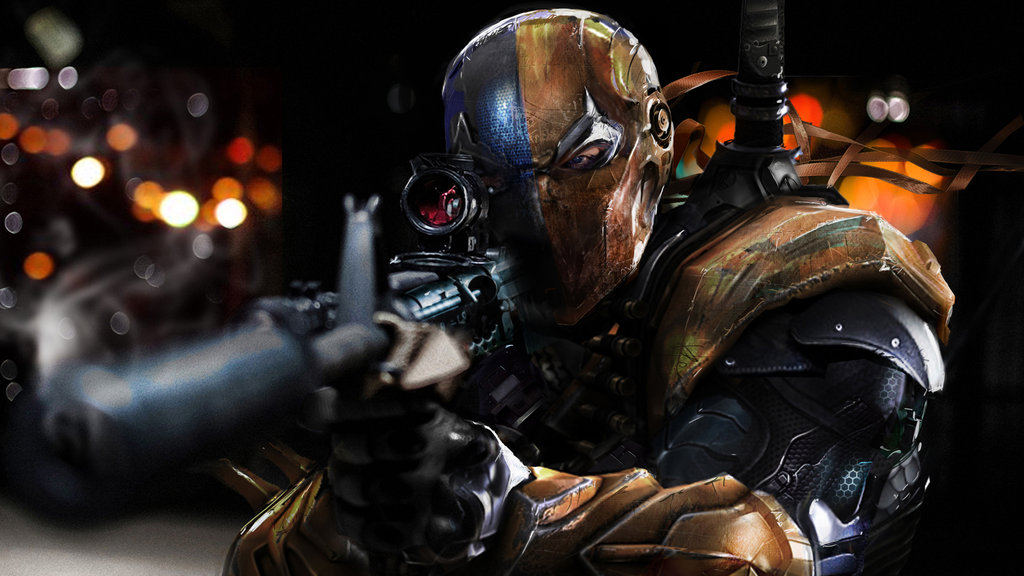
Deadpool first appeared in The New Mutants #98 created by writer Fabian Nicieza and artist/writer Rob Liefeld. Liefeld designed his appearance and Nicieza designed his speech and mannerisms. Liefeld happened to be a fan of DC's Teen Titans, an superhero group comprising of teenage heroes similar to how the New Mutants were teenage mutants, and designed Deadpool with the Teen Titans' main villain Deathstroke in mind.
This is Deathstroke
Upon seeing the design Nicieza said 'this is Deathstroke from Teen Titans' so they decided to make Deadpool a parody of Deathstroke. Instead of the serious manner of Deathstroke Deadpool gained a jokey manner (although he was not a jokey as he is today) and even his name (Wade Wilson) was made to parody Deathstroke's name (Slade Wilson). In his first appearance Deadpool is hired by an enemy of the New Mutants called Tollivar to kill the leader of the group, Cable. He failed after a new member of the group called Domino put three knives in his back. 

Further Publications
Following his first appearance Deadpool started making cameo in other Marvel publications such as The Avengers and Daredevil. In Daredevil it was revealed that he was also challenging regular Daredevil villain Bullseye to be the Kingpin's assassin-for-hire. Two years following his initial appearance he gained his own brief comic series called Deadpool: The Circle Chase where his character went from slightly jokey to be more humorous and psychotic. 
The success of The Circle Chase drastically improved Deadpool's popularity and he gained his own series in 1997. Through this we learnt more of Deadpool's backstory. He was once a mercenary but after developing cancer throughout his body he joined the Weapon X program, the same program which gave Wolverine his adamantium claws, to help him find a cure. Due to the extreme mortality rates of people experimented on people would place bets on how long patients would last for. A 'deadpool'. Through the tortuous experiments Wade Wilson gained the healing ability that Wolverine has but the experiments also mentally broke him and left him visibly scarred. This also allowed him to see the true existence of the Marvel Universe, basically he realized that everyone in the Marvel Universe were comic book characters. After he had his heart ripped out a mixture of a thirst for vengeance and his healing factor allowed him to break out of the Weapon X facility with other patients. Adopting the name Deadpool the 'Merc with a Mouth' adopted mercenary work again. In his first real title his breaking of the fourth wall and dark humor became more prevalent earning himself a cult following among comic book fans. His slapstick violence against his best friend Weasel and playing violent pranks on Blind Al, a blind woman who he was supposed to assassinate but ended up kidnapping her to be his cleaner. Although Al would get revenge on him by putting laxatives in his food.
2000s

After his own series finished in Deadpool #69 it was believed that someone called Agent X was Deadpool but with amnesia. This Agent X teamed up with Deadpool's old foe Cable to form the team Agency X. It was revealed that Agent X was actually a different person and that the real Deadpool was being nursed slowly back to health. The real Deadpool teamed up with Cable to stop a terrorist plot which was trying to release the shapeshifting 'Facade Virus' into the world. This started Cable and Deadpool, a series where the former enemies teamed up to help save the world. The person who stabbed Deadpool with three knives in his first appearance, Domino, developed a friendship with him which turned romantic. Although Deadpool's narcissism and homicidal mentality meant that it did not last it was hinted that he did actually have some feelings for Domino with many people believing that his fear of chickens was put on because Domino had a fear of chickens. 

Deadpool: Merc with a Mouth and After
In 2009 Deadpool gained another publication called Merc with a Mouth where he founded the Deadpool Corps. He got multiple different versions of him to form a superhero group which would go from universe to universe fighting villains, eating chimichangas and spouting pop culture references. Most of the comic covers were even parodies of film posters or famous comic covers including Jurassic Park, Jaws, Dawn of the Dead and Wolverine #1. Members of the Deadpool Corps. included the original Deadpool, Kidpool, Lady Deadpool, Dogpool and Headpool (the decapitated by still living zombified head of Deadpool from the Marvel Zombies universe). He left his Deadpool Corp. to their own devices so he could go off on his own adventures. Briefly he joined the more violent branch of the X-Men called the X-Force and during an invasion of the Earth by the creator of Asgard itself he stole a magic hammer from some werewolf hunters and gave it to someone  (called Walrus) who thought it would give him strength to rival the Hulk. Deadpool would then defeat him when Walrus rampaged through a town and the grateful townspeople would give him a tonne of Confederate gold. This plan failed when he had to return the hammer to the werewolf hunters to stop a werewolf invasion and when he found out that the town's gold had been stolen years ago. He was briefly institutionalized in an asylum in England resulting him taking the Queen hostage who convinces him to release her after giving Deadpool relationship advice. 

Deadpool vs. Deadpool
Deadpool has fought himself twice in the last few years. One was Evil Deadpool who was formed when Deadpool threw his frozen, desiccated body parts in a bin which thawed and joined together. It only ends when Evil Deadpool is shot by police and a mysterious assassin who had a dart nullifying his healing factor. The second time he fought himself was in Deadpool kills Deadpool. The origin of that stems from the special Deadpool Kills the Marvel Universe where in an alternate reality a sadistic voice comes into Deadpool's head after a failed mind control experiment which convinces him to kill all the Marvel characters in his universe and then the authors of Deadpool Kills the Marvel Universe. This alternate Deadpool, Dreadpool, decides to kill all the alternate versions of himself and manages to wipe out the entire Deadpool Corp, including my favorite PandaPool who Deadpool describes as being 'black and white and red all over', except for the original Deadpool. The battle between Deadpool and Dreadpool culminates in Dreadpool's original universe. During the battle Deadpool convinces Dreadpool that 'he did bad' and is killed by Deadpool.

Fun facts
Deadpool's favorite food is chimichangas although that is only through their long name. He also has very elequent handwriting saying that: I think it's a crime the way schools neglect the fundamental. Deadpool's awareness that he is in a fictional medium has transcended into cartoon, video game and even movie appearances. In the video game Marvel Ultimate Alliance 2 after you beat him in a boss fight he mentions how he needs to get a bigger life bar. His own video game, incidentally called Deadpool, breaks the fourth wall virtually every other sentence ranging from criticizing the player when his life gets too low and repeatedly says that his video game 'is the best ever'. Although he was completely ruined in X-Men Origins: Wolverine he seems to be his famous self again judging by the trailers which have shown he has broken the fourth wall. In the teaser trailer he says 'from the studio that inexplicably sowed his f****** mouth shut the first time' as a reference to what happened to him in X-Men Origins: Wolverine. In the actual trailer he says as well 'don't make the suit green or animated' as a little joke at the expense of the Green Lantern film which also starred Ryan Reynolds.